
How Connected Spreadsheets Accelerate Scenario Modeling and Decision Cycles
In deal work, time kills momentum. Analysts need real-time clarity as assumptions evolve. Bullet Point Network (BPN) links spreadsheets, memos, and slides so that once configured, a model update can propagate across connected charts, tables, and narratives, eliminating most manual reconciliation and enabling faster, more confident decisions.
By unifying these disparate workstreams into a single, analyst-guided AI workspace, investment teams can shift their focus from manual data entry to high-level strategic analysis.
Spreadsheet integration in deal analysis means creating a live connection between an underlying financial model and all downstream investment deliverables. This creates a dynamic research workflow where the firm’s own custom cash flows, valuations, and KPIs serve as the "single source of truth."
The Value of Live Spreadsheet Integration for Deal Analysis
The traditional private equity and venture capital workflow is defined by friction. Analysts spend hours copying values from Excel into Word memos and PowerPoint slides, only to repeat the entire process the moment a deal term shifts or a new quarter of data arrives. This manual "copy-paste" cycle is more than a nuisance; it is a source of operational risk.
BPN transforms this experience through deep spreadsheet integration. Instead of static snapshots, your research becomes a living system:
Live Links: The underlying model is directly connected to the platform.
Automatic Refresh: AI-generated charts and tables update instantly when cells change.
Unified Assumptions: Memos and slides pull from the same core data, ensuring the narrative always matches the math.
The result is a significant reduction in version mismatches. By eliminating the need for manual reconciliation, deal teams can move toward analyst‑guided automation that focuses on speed to insight. Teams spend less time checking if "Table 4" matches "Tab 3" and more time debating the merits of the investment itself.

Enhancing Scenario Modeling With Connected Data
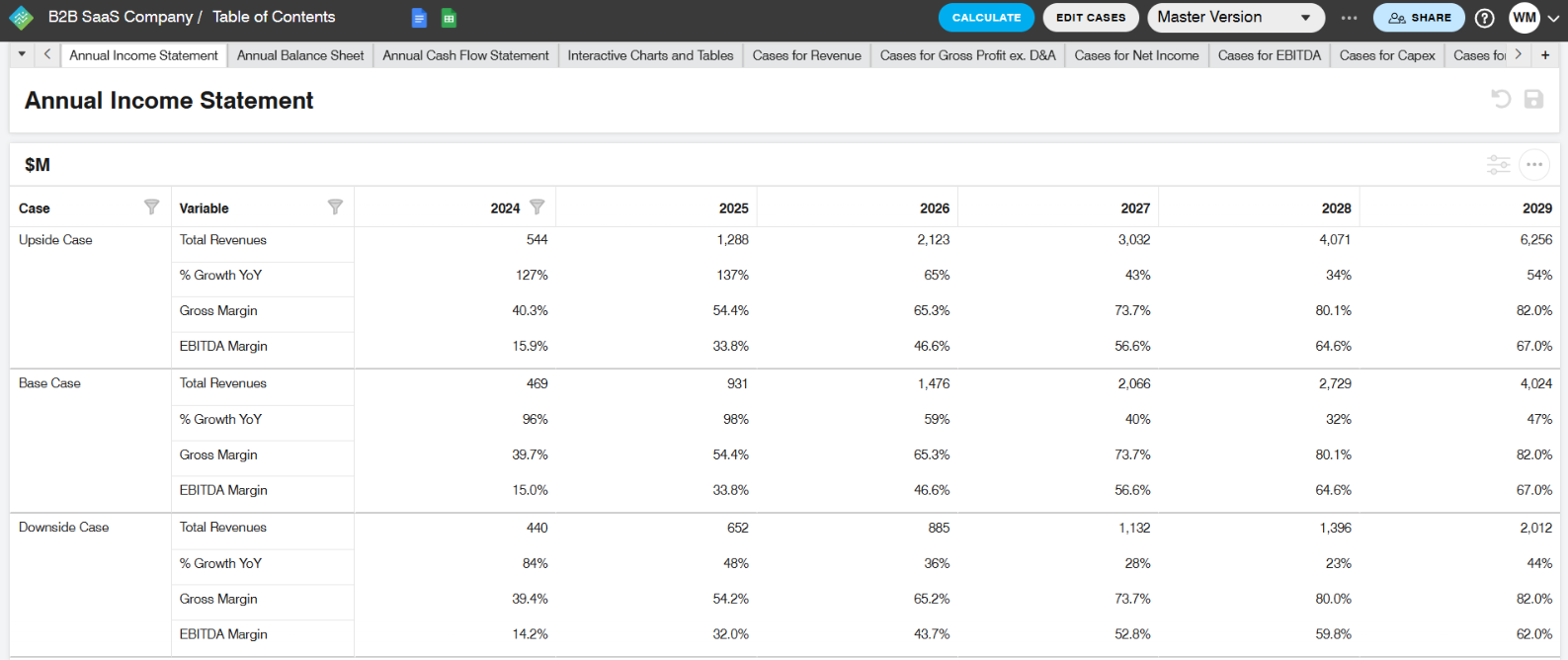
Effective scenario modeling requires the ability to stress-test assumptions rapidly. In a typical growth equity or LBO model, an associate might build out base, downside, and upside cases. Traditionally, presenting these to an Investment Committee (IC) requires three separate sets of manual updates across multiple documents.
With BPN, the associate toggles assumptions—such as revenue growth, churn rates, or exit multiples—inside the spreadsheet. The platform then automatically updates:
Case-specific visuals: Charts reflecting the new IRR or MOIC.
Narrative sections: The "Downside Risks" or "Base Case Summary" paragraphs in the memo.
IC Slides: The summary deck used for the final partner review.
Ahead of IC, a partner filters a downside case in the model. BPN instantly refreshes connected visuals and memo sections, ensuring every reviewer debates identical numbers. With data, narrative, and visuals aligned, teams reach consensus faster, without sacrificing accuracy.
In this context, diligence automation does not mean the AI makes the decision. It means the mechanical updates are handled by the platform, while the analyst remains firmly in control of the variables and the interpretation.
Driving a Dynamic Research Workflow Through Cascading Changes
In a dynamic research workflow, changes in the spreadsheet automatically cascade into memos and slides, so every stakeholder reviews the same scenario outcomes at the same time. This architectural choice solves the "version roulette" problem, where different partners might be looking at different iterations of a deal.
BPN is built for configuration, not black-box automation. Firms define exactly which tabs, ranges, and metrics are exposed to the platform.
When a model driver is updated, the linked memo paragraphs and slide visuals refresh while preserving previous analyst edits.
The AI assists in drafting the initial narrative based on the new numbers, but the analyst guides the final tone and emphasis.
This synchronization ensures that even if a model change happens minutes before a meeting, the entire "IC pack" is ready and accurate.
Data Traceability and the Evidence-Mapping System
One of the greatest hurdles in a high-stakes IC meeting is the "source of truth" question. When a partner asks, "Where did this margin assumption come from?" the momentum of the meeting often halts as the associate digs through files.
BPN’s data traceability and Evidence Mapper system solves this by creating a digital paper trail:
Cell-to-Slide Mapping: Every figure in a slide or memo is linked back to a specific spreadsheet cell.
Source Attribution: Where applicable, those cells trace back to source materials (e.g., a line in a CIM or a data room PDF).
Rapid Verification: Partners can click a chart in a deck to see the underlying model driver and its supporting evidence.
This transparency shifts the IC conversation from "Is this number right?" to "Is this assumption correct?" It provides a level of auditability that is essential for both internal rigor and external LP reporting.
Reducing Friction Between Analysts and Partners
Ultimately, connectingspreadsheets to the rest of the research workflow transforms the relationship between analysts and partners. Instead of a linear process of "model, then write, then present," the workflow becomes iterative and collaborative.
Analysts can respond to "what if" questions during live discussions by adjusting the model and refreshing the entire suite of materials in minutes. Partners gain the confidence that every chart and paragraph they see is tied to the most current data.
By integrating scenario modeling and analyst‑guided diligence automation into a single workspace, BPN keeps teams aligned on a single source of truth and significantly accelerates the decision cycle.
Ready to bridge the gap between your models and your memos? Let Bullet Point Network show you how accelerated scenario modeling works in our purpose-built AI investment platform.
