
Using GPT-5.2 + BPN’s Case Builder to Power Exit Valuation Stress-Testing
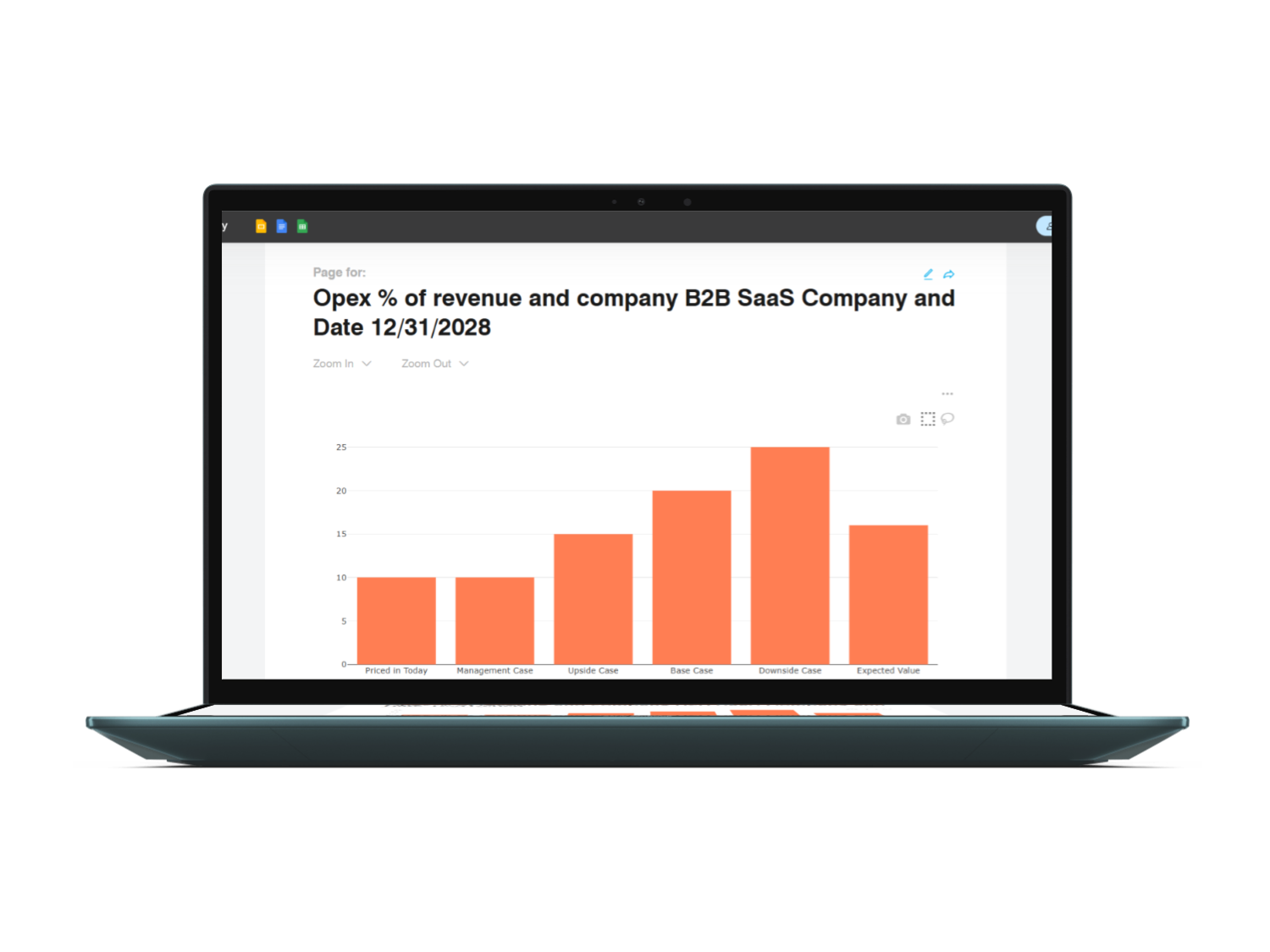
Why Exit Valuation Stress-Testing Is Where Deals Are Won or Lost
Private equity returns rarely follow the base case.
Yes, summarizing available data is easier with GPT-5.2. But translating judgment about future business performance and value-creation initiatives into defensible exit valuations requires something far more demanding: pressure-testing the edges of a real spreadsheet model, asking the right second- and third-order questions, and producing conclusions that hold up in an IC room.
With GPT-5.2 embedded inside BPN’s Case Builder, stress-testing moves beyond mechanical toggles and static sensitivity tables. It becomes a reasoned investment analysis, grounded in your thesis about how the business actually works.
How BPN leverages GPT-5.2
GPT-5.2 brings incremental improvements over 5.1 in multi-step reasoning. Much of the upgrade, however, is clearly optimized for coding, data augmentation, and API performance, largely in response to competition from Anthropic and Gemini.
For investment memo writing and slide production, the marginal gains are real but limited. Most importantly:
GPT-5.2 still cannot ingest your spreadsheet as a live calculation engine.
That limitation matters. A spreadsheet is not just numbers; it encodes your understanding of the business.
Why Spreadsheet-Native Reasoning Changes Everything
When you connect a model to BPN’s platform, you’re not uploading “data.” You’re encoding business logic:
Customer mix and concentration
Fixed vs variable cost structures
Pricing sensitivity and discounting dynamics
Capital intensity and working capital behavior
Growth drivers, margin levers, and operational constraints
Every calculation remains 100% accurate, every time, as you and your team designed it.
Using BPN’s three-level prompt engineering and proprietary source control, GPT-5.2 reasons through your model: understanding the relationships you built and the constraints you imposed.
Stress-testing stops being “±10% revenue” and becomes multi-case scenario analysis grounded in real business vulnerabilities, with evidence mapped back to trusted sources.
Example 1: Manufacturing Business with Customer Concentration Risk
Take a manufacturing company with a high customer concentration.
You ask BPN:
“Build a downside case where the largest customer churns in 2026.”
A generic LLM might cut revenue by a flat percentage and speculate eloquently about the impact.
BPN does something different.
It traces how that specific customer loss propagates through:
Fixed SG&A absorption
Working capital dynamics
Expense countermeasures (and their timing)
Debt capacity and covenant headroom
Pricing leverage
Pipeline replacement sales
With all mechanics captured accurately, EBITDA collapses faster than revenue—not because the concept is complex, but because the magnitude matters.
Insight produced:
“This downside scenario highlights structural over-reliance on Customer A, where a 14% revenue decline converts into a 31% EBITDA decline despite mitigating actions.”
That stress case is defensible. And if the team wants to explore alternatives, BPN provides transparent source footnotes, live spreadsheet logic, and instant scenario iteration.
Example 2: Software Business Under Competitive Pricing Pressure
Now consider a software business facing a fast-growing new entrant.
You ask BPN to simulate rising discounting in a crowded market.
GPT-5.2 doesn’t naively tweak one variable. It follows the causal chain:
Discounting lowers ASP
Gross margin compresses
Competitive pressure accelerates churn
Net dollar retention falls
Growth slows
Investor-acceptable exit multiples compress
Because this logic runs inside your spreadsheet, the conclusion is investment-grade:
Insight produced:
“Valuation declines by 32% under modest discounting pressure as margin compression compounds with rising churn, elongating payback periods, reducing CLTV, and lowering forward growth rates and exit multiples simultaneously.”
Not just what changes—but why.
Why This Matters in Real IC Discussions
Stress-testing in private equity isn’t about pessimism.
It’s about clarity.
Knowing which assumptions are fragile (and which withstand volatility) often determines whether a deal survives first contact with partners.
GPT-5.2’s enhanced reasoning, combined with BPN’s spreadsheet-native integration, surfaces flawed narratives early:
“Volume down, margins flat”
“Churn up, CAC unchanged”
“Growth slows, multiples hold”
Catching these inconsistencies before the IC meeting is often the difference between a confident discussion and a painful post-mortem.
Underwriting with Conviction, Not AI Theater
With GPT-5.2 inside BPN:
Stress tests are built in minutes
But reflect hours of real deal-team thinking
Assumptions are tied to business mechanics
Valuation moves are tied to consequences
Conclusions are tied to strategy
This isn’t about tagging research, toggling Excel inputs, or adding AI-generated caveats to slides.
It’s about underwriting with conviction.
Making Uncertainty Visible and Actionable
Exit valuations are never certain. Smart investors demand a margin of safety for a reason.
But with BPN’s reasoning engine, three-level prompts, spreadsheet case builder, and GPT-5.2—backed by source control and full transparency—the drivers of value become:
Visible
Explainable
Debatable
Actionable
So both upside and downside scenarios are genuinely explored—not theatrically simulated.
BPN’s AI+1 workflows exist to support real investment work, not AI theater.
